
Best Prepared Meal Delivery Services (2026)
5 Factor Alternatives Worth Considering and 2 I’d Skip
Wondering if there are any other heat and eat delivery companies besides Factor? I researched some of the lesser-known prepared meal services and started trying them myself to see which are actually worth considering. Turns out there are quite a few and here’s a roundup of the top 5.
Affiliate disclosure: This post contains affiliate links. If you buy through them, I may earn a commission at no extra cost to you, and it never changes what I recommend. Full disclosure here.
Eating well doesn’t have to mean hours in the kitchen.
Prepared “heat-and-eat” meal delivery is a different animal from a meal kit. There’s no chopping, recipe or pile of little ingredient bags waiting for you to turn them into dinner. The food arrives fully prepared and you reheat it in a few minutes.
That convenience is the whole point. But once you start comparing these services, the differences come down to a surprisingly short list of things that actually matter: where they deliver, fresh vs. frozen, price, how the food actually tastes, ingredient quality, how much choice you get and whether the meals reliably show up at your door.
I’ve used meal kits before and liked several of them, but prepared meal delivery was something I hadn’t explored much until recently. And I have to admit, coming home from work and opening the refrigerator to find several actual dinner options waiting for us is pretty awesome.
I like to cook. I just don’t always have the time or desire to do it. Having something prepared at home is also a much better option for us than defaulting to takeout or staring into the refrigerator at 7 p.m. wondering how crackers became dinner.
So I started looking for Factor alternatives that might offer something different.
I compared the better-known services, read a ridiculous number of customer reviews, dug into ingredients, nutrition, pricing, delivery areas and company policies and started actually trying the services myself.
This is what I’ve found so far.
The Picks at a Glance
I don’t think there’s one “best” prepared meal service for everyone. The better question is what matters most to you?
Factor → I want something easy, established and familiar.
CookUnity → I want lots of choice and more restaurant-style food.
Thistle → Plant-forward ingredients and dietary preferences matter most to me.
BistroMD → I want more structure around weight management.
FlexPro Meals → Price and protein matter more than culinary excitement.
Macroplate → I care about macros, ingredient sourcing and cooking oils.
How I Compared Them
I looked beyond the menu photos.
I compared price, ingredients, nutrition, variety, meal choice, delivery area, fresh vs. frozen and how the meals are actually prepared and reheated.
I also went looking for the less glamorous stuff: subscription and cancellation policies, customer-service complaints, delivery problems and whether the same issues kept appearing across unrelated customer reviews.
And I’m working my way through actually eating them.
That last part matters. A company can have beautiful macros, impressive sourcing claims and a spectacular-looking menu. None of that helps much if dinner arrives looking like beige sadness in a plastic tray.
So here’s where I am, plainly. I’ve eaten CookUnity and Macroplate myself, and each one gets a full review of its own. Factor, Thistle, BistroMD and FlexPro I’ve researched carefully but haven’t eaten yet, but will update when they make it into the rotation.
The Reviews, One by One
Factor: The One Everyone Already Knows
Factor is the default answer for a reason.
It’s one of the biggest names in prepared meal delivery, with a large rotating menu of fully prepared meals that arrive fresh and reheat in just a few minutes. There are options geared toward higher protein, lower calorie, keto, vegetarian and more general balanced eating, plus a substantial collection of add-ons such as breakfasts, shakes and snacks.
Factor also provides unusually detailed information about its ingredients and has specific guardrails around things like artificial colors, refined sugar and certain additives, which I appreciate. The meals are designed with registered dietitians, and Factor also offers a free 20-minute one-on-one nutrition consultation with a Registered Dietitian.
If what you want is easy, established and well reviewed without having to think very hard about it, Factor makes a lot of sense.
So why look elsewhere?
The most common reason I hear is simple: people get tired of it.
Once you’ve been ordering for a while, even a good rotating menu can start feeling familiar. That’s what sent me looking for the alternatives in the first place.
- Best for: Easy, dependable prepared meals with lots of diet-style options
- Fresh or frozen: Fresh
- Watch for: A flat ~$13.99-per-box shipping fee, premium per-meal pricing, add-ons that could make the weekly bill climb quickly, and delivery to the 48 contiguous states only.
- Tried it: Not yet — researched only
CookUnity: Best for Variety and Restaurant-Style Food
CookUnity immediately stood out because it works differently from most prepared-meal companies.
Instead of one centralized menu, its meals come from a large collection of professional chefs working in local kitchens. That gives the whole service more of a prepared-restaurant-food feel than a traditional meal-prep-tray feel.
And there is a lot to choose from.
You can browse meals by cuisine, protein, dietary preferences and even chef. My signup also let me create a taste profile specifying cuisines I like, proteins I prefer and ingredients I’d rather avoid.
No bok choy over here. And no fake vegan meat, please. Just give me the vegetables. 😂
That level of control matters more to me than I realized. When I’m feeding more than just myself, a theoretically wonderful meal isn’t particularly useful if nobody wants to eat it.
CookUnity also offers add-ons beyond the regular weekly meals, which can be useful if you want dinner covered but occasionally need breakfast, lunch or an extra meal too.
The one thing I’m looking at more closely is ingredient transparency. The chef-driven, restaurant-style model means recipes, sauces, cooking fats and sourcing can vary from dish to dish. CookUnity talks about thoughtfully sourced ingredients, but I haven’t found one universal ingredient standard that applies across the entire menu.
That’s not necessarily a problem. It just tells me what CookUnity is selling: choice, chef creativity and restaurant-style variety rather than one tightly prescribed ingredient philosophy.
For some people, that’s exactly the point.
A note for anyone with a food allergy: because meals are made by independent chefs in their own kitchens, CookUnity is not a certified allergen-free or allergen-controlled facility. Every meal carries a notice that it may be produced where milk, eggs, fish, shellfish, tree nuts, peanuts, wheat/gluten, soy and sesame are also handled. Setting an allergy in your taste profile lowers the chance of getting that ingredient directly, but the company is clear it doesn’t eliminate the risk of facility cross-contamination. If you have a true allergy, read the label on each meal rather than relying on the profile filter.
- Best for: People who get bored easily or households with different tastes
- Fresh or frozen: Fresh, never frozen
- Watch for: A variable delivery fee — on my order it came to about $16, bundled into the same line as taxes and fees — plus selection that depends on location and ingredient details that vary by dish.
- Tried it: Yes — I’m a current subscriber. Full CookUnity review coming soon.
Check delivery & current menu →
Thistle: Best for Plant-Forward Eating and Dietary Preferences
Thistle caught my attention for a completely different reason.
Where CookUnity leans heavily into variety and restaurant-style meals, Thistle leans into fresh, plant-forward food with an emphasis on whole and organic ingredients. All of Thistle’s meals and juices are made without dairy, eggs or ingredients containing gluten. The menu is overwhelmingly plant based, and for lunches and dinners you can choose plant-based protein or add animal protein.
Thistle is able to accommodate numerous dietary preferences including dairy, egg, gluten ingredients, soy, tree nuts, peanuts, seafood, shellfish and pork free. However, on their website it states “While our food and juices are always made without dairy, eggs, or ingredients that contain gluten, our facility regularly processes soy, peanuts, tree nuts, sesame, seafood, and shellfish. We do not recommend our service to those with severe allergies to these items (soy, peanuts, tree nuts, sesame, seafood, shellfish). Though all of our food is made without gluten ingredients, we have not obtained a Gluten Free Certification at this time and therefore we do not recommend our service to those with severe allergies to gluten.”
Thistle offers once or twice weekly delivery options which I appreciated as most prepared foods are questionable after 5 days in the fridge. I also really appreciated their commitment to sustainability and careful sourcing of ingredients especially choosing organic for all the produce on EWG.org’s Dirty Dozen list if possible.
Thistle has expanded considerably, but it isn’t available everywhere, and some of its dietary accommodations are only available with local delivery rather than shipped orders. You’ll need to check your ZIP code to see what’s available where you live.
If plant-forward eating, ingredient quality and dietary preferences rank higher on your list than getting the cheapest possible dinner, Thistle is one I’d look at.
- Best for: Plant-forward eating and people avoiding dairy, eggs or gluten ingredients
- Fresh or frozen: Fresh
- Watch for: Delivery area, a per-delivery fee starting at $4.95 per delivery and premium pricing.
- Tried it: Not yet — researched only
Check delivery & current menu →
BistroMD: Best for Structured Weight Management
BistroMD is the most structured option in this group.
Founded by physician Caroline Cederquist, BistroMD approaches prepared meals more like a nutrition program than simply a collection of dinners. Its current options include Signature, GLP-1, Diabetes Friendly, Heart Healthy, Gluten Free, Vegan, Menopause Friendly and Keto Flex programs.
You can choose a more structured program that maps out your meals for the week according to your stated goals or use its flexible meal-delivery option and choose your own meals.
The meals arrive frozen rather than fresh. Frozen meals last longer, create less pressure to eat everything before it expires and make it easier to keep backup meals available. You might trade some flavor/texture changes in cooking from frozen but for some that might be worth it.
BistroMD also puts more emphasis on dietitian-designed nutrition, structured portions and specific nutrition goals than most of the restaurant-style services.
That makes it less appealing if what you want is culinary adventure, but potentially much more useful if what you want is structure and fewer food decisions.
One more caveat: recent customer reviews give me some pause. I found recurring complaints about delivery, thawed meals, ordering and cancellation issues and inconsistent food quality. That’s enough of a pattern that I’d pay attention to recent reviews and understand the subscription terms before ordering.
- Best for: People who want a structured weight-management meal plan
- Fresh or frozen: Frozen
- Watch for: A long discount runway that delays the real price — 50% off your first week, then 10% off the next four, so full price doesn’t land until week six. At that point a 7-day full program runs somewhere around $275 a week once the $19.95 shipping kicks in. Though, for all your meals for 7 days, this might be price neutral. Also, review recent customer-service and delivery complaints
- Tried it: Not yet — researched only
FlexPro Meals: Best Lower-Cost High-Protein Option
FlexPro is the value play.
It’s one of the more affordable macro-focused services I found, with current pricing starting around $7 per meal depending on box size. The meals are flash frozen, protein-forward and organized around goals such as building muscle, boosting energy and weight management.
That makes FlexPro interesting if your priorities are basically:
Give me protein. Give me the macros. Don’t make dinner cost $17.
There are tradeoffs.
The ingredient lists look more like conventional prepared food than some of the ingredient-focused services in this roundup, and the menu leans heavily toward protein-centered meals. If avoiding particular oils, additives or highly processed ingredients matters to you, I’d check individual meals rather than assuming they all follow the same standard.
Customer feedback is also unusually split. FlexPro has very strong overall reviews on Trustpilot, including plenty of praise for affordability, convenience and customer service. But I also found recurring complaints elsewhere involving thawed or damaged deliveries, subscription and cancellation confusion and inconsistent food quality.
That doesn’t automatically make FlexPro a no. Every large delivery service generates complaints, and plenty of customers seem genuinely happy with it.
But when the primary appeal is price, protein and convenience, it’s worth knowing where some of the compromises may show up.
- Best for: Budget-conscious shoppers who prioritize protein and macros
- Fresh or frozen: Flash frozen
- Watch for: A $14.99 shipping fee on orders under $150, which meaningfully changes the real per-meal cost on a smaller box, more conventional ingredients, and mixed reports about subscription management
- Tried it: Not yet — researched only
Macroplate: Best Regional Pick for Macros and Thoughtful Ingredients
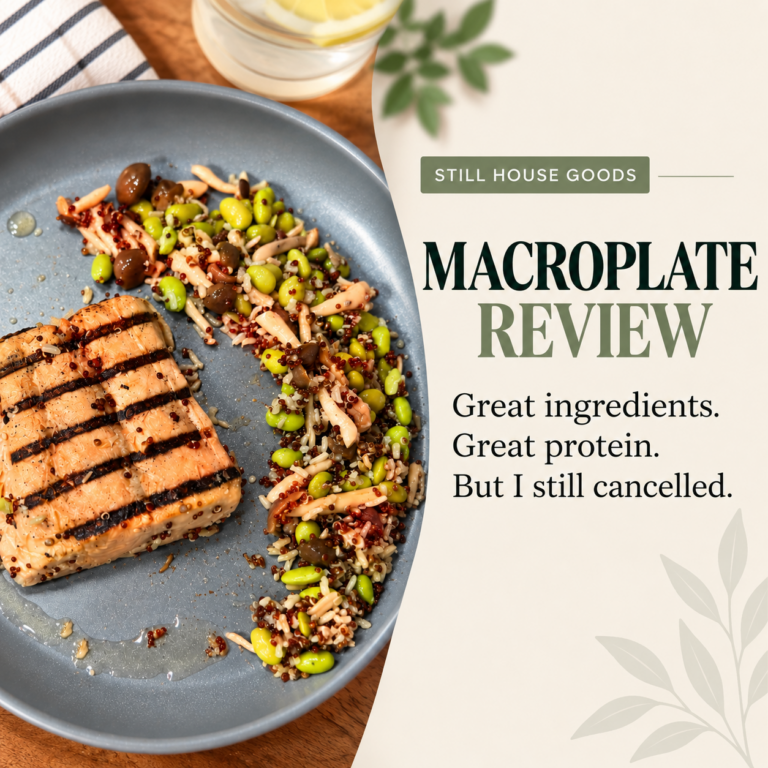
Macroplate is the regional wildcard, and was the first one I tried.
Its ingredient standards are some of the most impressive I found. Macroplate cooks with cold-pressed organic avocado oil, organic extra-virgin olive oil and organic coconut oil rather than seed oils. It emphasizes locally sourced produce, responsibly sourced seafood and unusually specific standards for its beef and poultry.
There’s also quite a bit of personalization when you sign up.
You can choose one, two or three meals per day and select from programs including High Protein, Traditional, Paleo, Paleo Lite and Vegetarian. Macroplate also asks about allergies, protein preferences, preferred meal styles and goals such as losing weight, building muscle, improving health or simply saving time.
I chose the High Protein plan. At the September 2026 signup checkout, High Protein was $18 per meal. My plan of four breakfasts and four dinners came to 8 meals ($144), plus $10 for one weekly delivery, for a $154 weekly total. That matches the $154 recurring charges on my actual account.
One thing I particularly liked was the reheating. Macroplate provides stovetop instructions in addition to microwave directions. I reheated mine in a pan with a little water, and the finished meal looked surprisingly fresh for prepared food. The vegetables still looked like vegetables and the steak actually browned rather than developing that unmistakable microwaved-meat personality.
But despite all that personalization, Macroplate taught me something important about what I want from a meal-delivery service:
I want to choose the actual meals.
Macroplate uses your preferences to build your plan, but you don’t select each individual meal that goes into your weekly box.
For some people, that’s a feature. You tell them what you’re trying to accomplish and meals show up without another round of decisions.
For me, especially when I’m feeding more than one person, it was the dealbreaker. At this price point, a perfectly good meal that nobody particularly wants to eat is still an expensive wasted meal.
So I eventually moved on from Macroplate.
I still think there’s a lot to like here. If ingredient sourcing, cooking oils and nutrition targets matter to you, and you’d rather have someone else choose the meals, Macroplate may be exactly the kind of service you’re looking for.
Sometimes the feature one person dislikes is exactly what somebody else is paying for.
- Best for: Macro-conscious eaters who care about ingredient sourcing and want fewer meal decisions
- Fresh or frozen: Fresh
- Watch for: Regional availability, premium pricing, a $10-per-delivery fee and no way to choose your meals for the week. Maybe that will come as they expand, but as of Aug/Sept 2026 it’s not an option.
- Tried it: Yes — two weeks as a subscriber, then I cancelled. Full Macroplate review coming soon.
Check current menu & delivery area →
Two I’m Not Recommending Yet
There are two services I came across that I’m not comfortable putting in the recommendation pile yet.
Fuel Meals
On paper, Fuel Meals has plenty going for it. It’s performance-oriented, protein-heavy and built around the kind of macro-focused meals that appeal to people who want a lot of protein without doing a lot of cooking.
But I’m holding off on recommending it for now.
I found a small but concerning cluster of recent customer reports involving delayed or damaged deliveries, recurring-order and cancellation frustrations and difficulty resolving problems when something went wrong.
A handful of angry reviews doesn’t tell you much. Every company has those.
Patterns do.
Fuel Meals says its subscription terms are disclosed during checkout and that customers receive reminders before upcoming orders, so this isn’t as simple as saying the company makes subscriptions impossible to cancel. But I found enough recent friction around shipping, billing and subscription management that I’d want to see that improve before putting Fuel Meals in the recommendation pile.
For now, there are enough other options I’d try first.
Forkful / Eat Clean To Go
Forkful caught my attention because its ingredient standards sound genuinely appealing, including its emphasis on seed-oil-free prepared meals.
But the deeper I looked, the less comfortable I became recommending it.
I found recurring customer reports involving missing or incorrect meals, delayed or warm deliveries, difficulty reaching customer service and frustration getting refunds or credits when something went wrong.
I also found that Forkful is connected with Eat Clean To Go, where many of the same operational complaints appear in customer reviews.
Again, I’m less interested in whether someone hated one chicken dinner than whether the same logistical problem keeps appearing across unrelated reviews.
Prepared food only works as a convenience if the operation behind it is convenient.
There may be perfectly happy customers here, and these companies could improve. But right now, I found enough repeated problems around fulfillment, billing and problem resolution that I’m not comfortable putting either service in the recommendation pile.
For now, there are other options I’d try first.
So Which One Should You Choose?
This may be the most useful thing I learned from trying to rank them:
The “best” prepared meal service depends on what problem you’re actually trying to solve.
If taste and variety matter most, CookUnity’s huge chef-driven menu may be worth trading some consistency in ingredient standards for.
If ingredient standards and dietary preferences matter most, Thistle or Macroplate may move higher on your list.
If structure and fewer decisions matter most, having someone else choose the meals might actually be a feature rather than a limitation.
If you’re feeding picky people, the ability to select individual meals suddenly becomes enormously important.
If nutrition targets matter most, protein, calories, carbs, sodium and portion size may drive the decision more than whether dinner looks restaurant-worthy.
And if budget matters most, a pretty-good $8 dinner may beat a phenomenal $15 dinner every single time.
That’s why I’m not crowning one universal winner.
Different dinners solve different problems.
Frequently Asked Questions
What’s the cheapest prepared heat-and-eat meal service?
Of the services I compared, FlexPro is among the less expensive options, especially during promotions. Pricing changes frequently and usually depends on how many meals you order, so compare the current per-meal cost before subscribing.
What do these services charge for shipping and delivery?
The advertised per-meal price is rarely the whole story.
All of the services I compared charge some kind of shipping or delivery fee, but they structure those charges very differently. And because first orders often come with steep discounts or free shipping, you may not notice the real ongoing cost until your next delivery.
Here’s what I found:
Factor: About $13.99 per box for shipping (around $10.99 on the first order), with no free-shipping option. Ships to the 48 contiguous states only.
CookUnity: Delivery and tax appear together in a “Tax & fees” line at checkout rather than as a separate flat shipping fee. On my first Phoenix-area order of 8 meals at $12.59 each, that combined line was about $16. Check your own checkout total because the amount may vary by location and order.
Thistle: Delivery starts at $4.95 per delivery. If your plan has two deliveries in a week, that fee applies twice, and discounts don’t apply to it.
BistroMD: Shipping is $19.95 per order after the first order, which ships free.
FlexPro Meals: Shipping is $14.99 for orders under $150 and free for orders above $150.
Macroplate: My High Protein plan was $18 per meal for 8 meals (four breakfasts and four dinners), or $144 in meals, plus $10 for one weekly delivery. The $154 weekly total matches my actual recurring charges. Check the current fee for your own plan and delivery schedule.
Budget for the regular price, not the introductory one.
Which prepared meal service is best for weight management?
BistroMD offers the most structured weight-management approach of this group. Factor and several of the others also offer calorie-conscious or higher-protein choices, but BistroMD is built more explicitly around structured meal programs.
Fresh or frozen: does it matter?
Mostly for convenience, shelf life and texture.
Fresh meals can feel closer to freshly cooked food but need to be eaten relatively quickly. Frozen meals keep much longer and make it easier to stock the freezer without worrying about food waste.
Neither is inherently better. It depends on how you plan to use them.
Which service is best if ingredients matter to me?
That depends on which ingredients matter to you.
Thistle emphasizes plant-forward meals made without dairy, eggs or gluten-containing ingredients. Macroplate stood out to me for its unusually specific sourcing standards, including its cooking oils, proteins, seafood and produce. With a chef-driven service such as CookUnity, ingredients and sourcing may vary more from meal to meal.
If you have a true food allergy, always check the company’s allergen policies and the individual meal rather than relying only on menu filters.
Are any of these regional?
Yes. Macroplate has a limited regional delivery area and Thistle availability depends on location. Even companies with broad delivery coverage may have ZIP-code exclusions, so always check your address before getting emotionally attached to a dinner. 😆
Can I skip or cancel deliveries?
Most subscription services allow some combination of skipping, pausing or canceling, but cutoff dates and refund policies vary considerably.
This is one of those boring details worth checking before ordering rather than discovering it while yelling at your laptop later.
One Last Thing
Prices, menus, promotions and delivery areas change constantly, so consider the company’s current website the final word on those details.
I’m also continuing to research and try these services myself, which means this roundup will evolve as I learn more.
Because ultimately, that’s what I want to know too:
Does it look good on the website, or is it actually worth making room for in the refrigerator?
This post contains affiliate links. If you purchase through one, I may earn a commission at no additional cost to you. Affiliate relationships don’t determine which services I recommend.